
The things we don't measure
7/16/20264 min read
Not long ago, I caught myself looking at my watch after a walk.
It congratulated me for reaching my step goal. My heart rate had recovered well. I'd spent forty-eight minutes moving. There was a neat collection of numbers telling me the walk had been worthwhile.
What it couldn't tell me was that somewhere between the sound of the wind and the smell of the sea, a problem I'd been carrying for days had quietly dissolved. It couldn't measure the conversation I had with myself, or the unexpected feeling of perspective that arrived when I stopped trying to force one. It certainly couldn't tell me that, for a brief moment, I remembered that life is much bigger than the list of things waiting for me back at my desk.
The watch is giving good data, sure. But it simply measures the part that can be measured.
I've been wondering about this ever since.
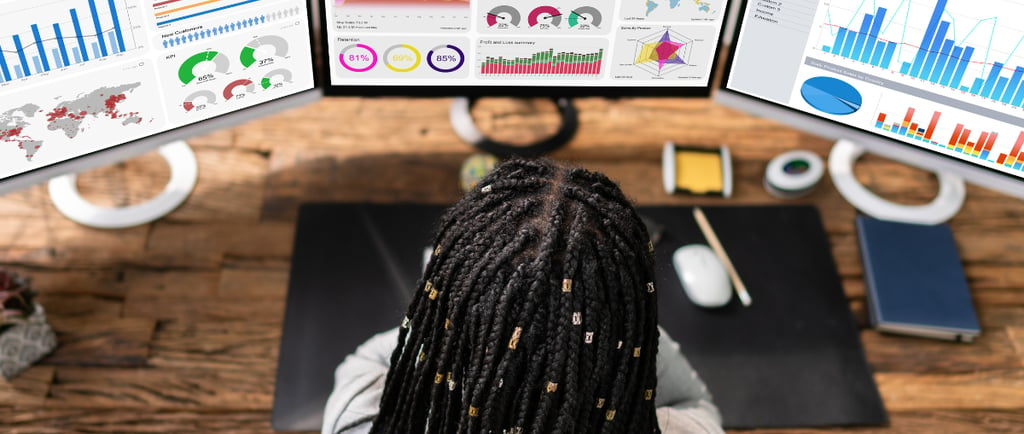
We live in an age that is exceptionally good at counting. We count our steps, our hours, our followers, our revenue, our sleep, our productivity and, increasingly, our moods. There is something deeply satisfying about reducing the complexity of life to a number. Numbers create the reassuring feeling that we understand what is happening, and what we understand feels easier to improve.
Perhaps that's why we are so drawn to them.
If something can be measured, it can be compared. If it can be compared, it can be optimised. And if it can be optimised, we feel as though we are making progress.
Yet some of the most important things in life have a habit of slipping straight through the measuring tape.
How do you quantify trust? Or wonder?
How do you know whether your marriage has become richer this year? How would you measure the depth of a friendship, or the quiet confidence that comes from finally feeling at home in your own skin?
These are not rhetorical questions... I genuinely don't know.
What I do know is that they matter enormously.
I spent years working in engineering and science, professions built on measurement. We measured flows, costs, performance, risk and compliance. Much of that work depended on precision, and rightly so. Good decisions require good information.
But there was always another layer, one that refused to fit neatly into a spreadsheet.
Two teams could have the same budget, the same workload and the same strategy, yet one would flourish while the other slowly came apart. The difference was rarely visible on a dashboard. It lived in the conversations people were having when no one senior was in the room. It lived in whether mistakes could be admitted without fear, whether people trusted one another enough to disagree, and whether going home on time was quietly interpreted as a lack of commitment.
None of those things were easy to measure. All of them shaped performance.
I think we make the same mistake in our personal lives.
We become captivated by what is visible because visibility gives us the comforting illusion of control. If I can improve the metric, then surely, I must be improving my life.
Sometimes that's true. Sometimes it isn't.
I've met people with immaculate morning routines who were quietly exhausted. People who hadn't missed a workout in years but hadn't had an honest conversation with themselves for even longer. Leaders who knew every number on the monthly report yet had no idea that the people around them were slowly disengaging.
Optimisation is a wonderful servant. But it becomes a poor compass.
The Daoists understood something that modern life often forgets. Healthy systems are not those that maximise a single variable. A river does not flow faster because it is trying to win. A forest does not become stronger by asking every tree to grow as quickly as possible. Nature seems remarkably unconcerned with optimisation. It is far more interested in relationships, balance and adaptation.
Perhaps we are not as different from forests as we like to imagine.
A life, like any ecosystem, can become unbalanced long before it becomes obviously broken. The difficulty is that the earliest signs are often the hardest to measure. We notice that we are becoming impatient with people we love. We stop reading for pleasure because there is always something more productive to do. We find ourselves reaching for our phones in every quiet moment because silence has begun to feel unfamiliar.
No alarm sounds. The dashboard still looks reassuring. Yet something important is asking for our attention.
I like asking questions (maybe too much so). And I sometimes wonder whether the question that matters most is not "How am I performing?" but "What kind of life is my performance creating?"
One of these invites us to optimise. The other invites us to reflect.
Perhaps that is why the ancient philosophers spent so little time talking about efficiency. They were preoccupied with something much more difficult: what it means to live well. Not successfully. Not impressively. Well.
I'm not suggesting we throw away our watches, our spreadsheets or our goals. Measurement has its place. It keeps aeroplanes in the sky and hospitals functioning. The problem begins when we mistake measurement for meaning.
The two are not the same. By the end of your life, nobody is likely to ask how many emails you answered, how many meetings you attended or how many days your meditation streak lasted.
They may, however, remember how you made them feel. Whether you were present. Whether you listened. Whether your children laughed more when you came home. Whether your work left the world, or even just one person's world, a little better than you found it.
Those things resist measurement. They always have. Maybe that's precisely why we should pay them more attention
Let's build capacity that creates impact.
© 2026 Aspasiana. All rights reserved.
Whether you're investing in yourself or your team, we'd love to help you take the next step.

